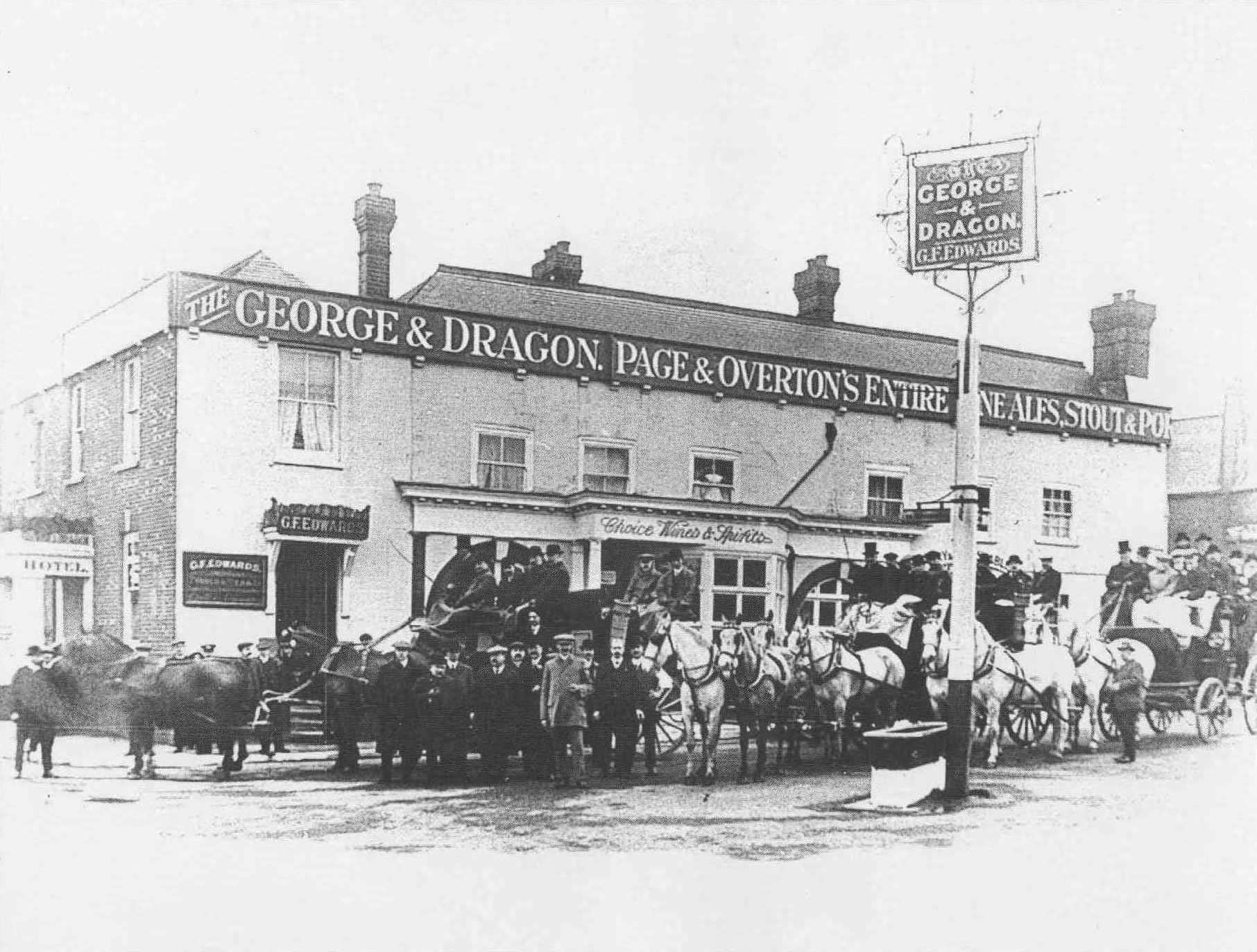



TURNPIKE
Roads, for longer than people could remember, were nothing more than dirt tracks that turned to mud in the winter and baked rock hard in the summer. Movement along these 'roads' was difficult and at certain times of the year, practically impossible.
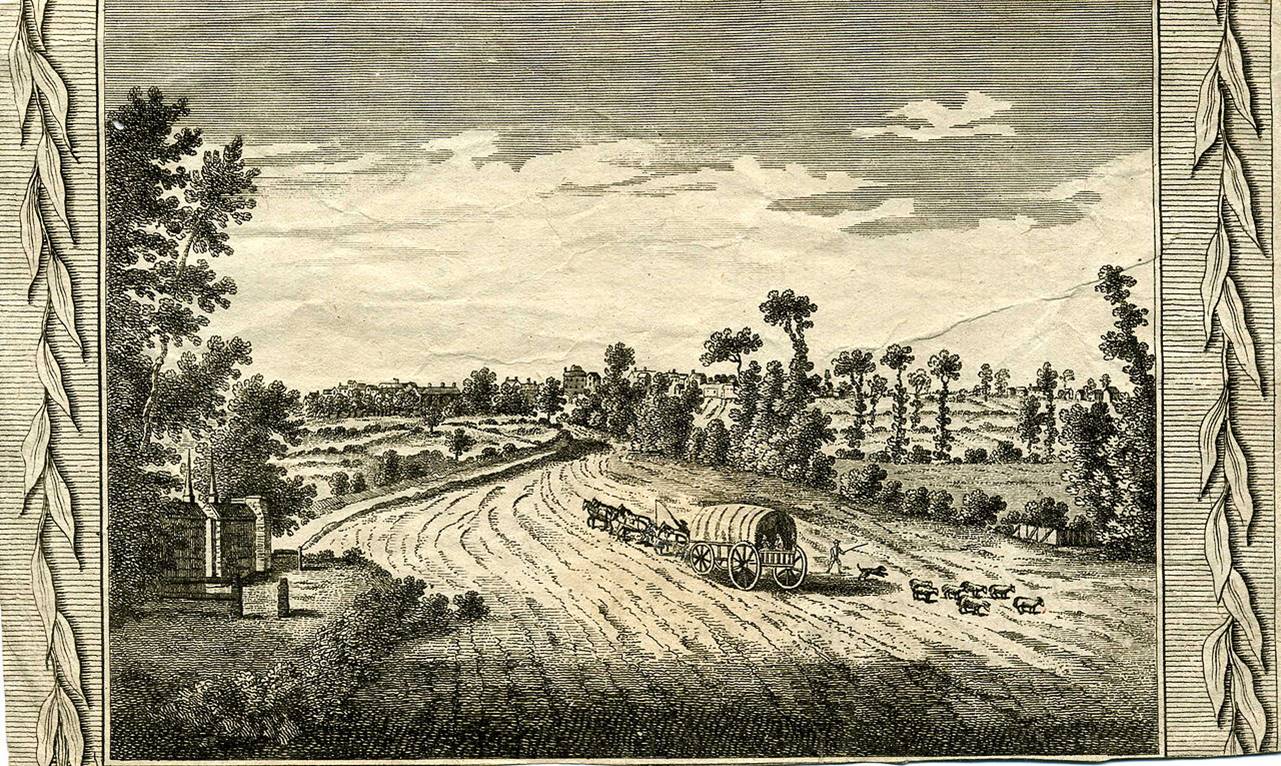
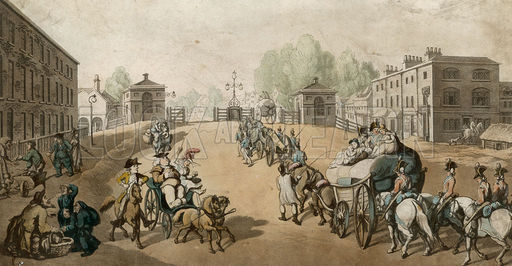
The most notorious was the Great North Road, shown in this painting, which was used to herd livestock from the north of England and Scotland to market in London.
 |
By law, every parish had to look after the 'roads' that ran through their area - men were meant to work for 6 days every year to maintain and repair the roads. However, very few villagers travelled, therefore they were not particularly interested in doing this task, especially as it - and roads - seemed to offer them no benefits. |
But the growth generated by the start of the industrial revolution meant that a better transport system was needed. In 1663 Parliament passed what was known as the Turnpike Act. This was originally only used in three counties to see if it worked. The act allowed magistrates to charge people for using roads, and the money raised was spent on properly maintaining them. The success of this scheme meant that the 1663 Act was the first of hundreds throughout the country.
After a slow initial takeup, all of the major routes out of London were turnpiked by 1730. The most rapid growth took place between then and 1770, "Turnpike Mania". The map shows the turnpike roads surrounding London as it was around 1810, click to enlarge. It can be seen that many roads had many gates |
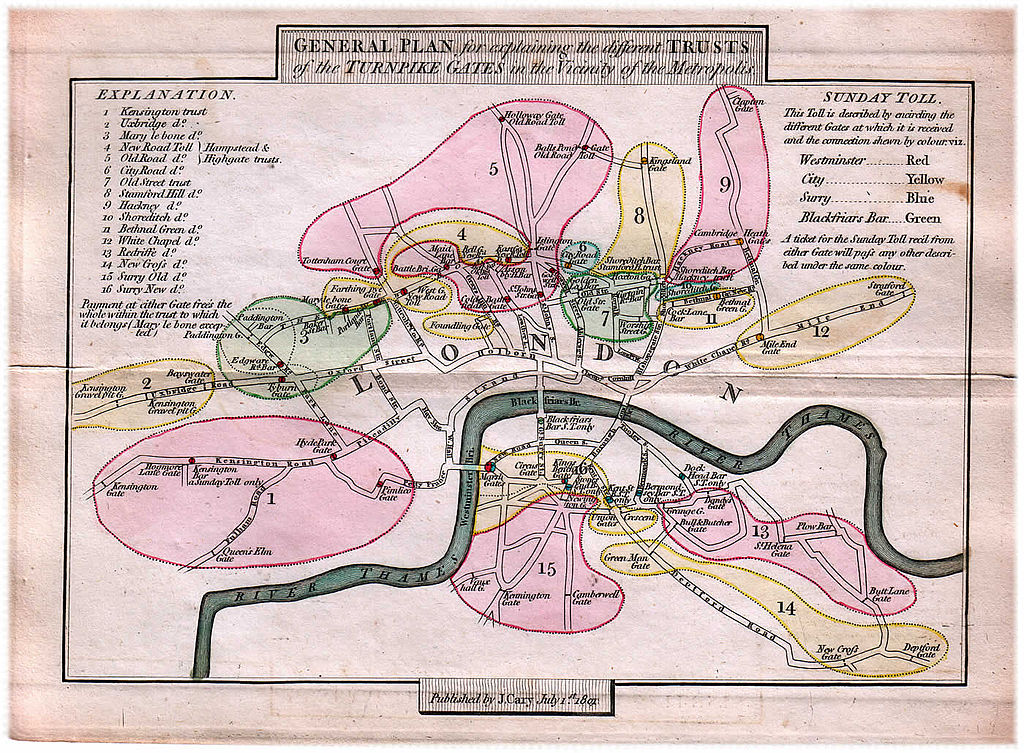 |
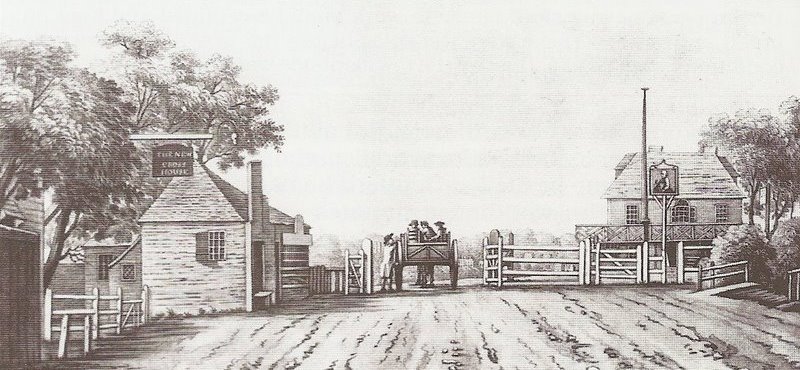
The New Cross Turnpike. numbered 14 and shown in yellow in the map, leads toward Bromley and Farnborough. The painting below is of the toll gate in Deptford at the start of the turnpike route toward Kent.
 |
The growth of the system is shown in this table.
| Year | Number of Turnpikes in England | |
| 1663 | Firdt Turnpike Act - Great North Road | |
| 1695 - 1730 | Principal Routes out of London | |
| 1750 - 1772 | 'Turnpike Mania' (11,500 miles) | |
| 1800 | 700 Turnpikes | |
| 1830 | 1,000 Turnpikes (30,000 miles, 6,000 Toll Gates) |
Differences in topography, access to competing water-borne transport, sources of wealth in the area and proximity to the homes and resorts of the rich made for significant differences in the pattern of turnpike development between counties. The rapid rise in manufacturing in the towns of Northern England led to the creation of many totally new routes in the 19th century, whereas in southern counties highways to markets were well established and improvements to existing routes were most common.
Coach traffic was likely to bring new business to intermediate towns along the route, and some communities tried to make improvements that would attract trade through their town. Success in persuading the Mail to use the road would be expected to increase overall usage, bringing more wealth to the inns and those supplying these hostelries with food, provender and services.
Turnpike Trusts
The various Turnpike Acts empowered private companies called Turnpike Trusts to improve and operate the new roads. The first one was created in 1706, from which time the public was given the opportunity to invest in them. The money raised by charging people to use the roads was split between profits for the share holders and the cost of maintaining the roads in the control of the trust.
 |
| Whitechapel Turnpike gate |
People had to pay a toll to use the roads. Toll gates were erected through which people and carriages had to pass before continuing with their journey. Before turnpikes, people had been used to using what passed for roads for free. Now, the roads may have been better but many people objected to paying a toll. Some would even jump over the toll gate to avoid paying. To decrease the chance of this happening, spikes (or pikes) were put at the top of the gates - hence the title turnpike.
TURNPIKE ROAD