

THE FINAL NETWORK - THE SE&CR
The SER had a history of acrimonious relations with other companies with which it had to deal, starting with the London Brighton and South Coast Railway, until a settlement was agreed in 1849.
This acrimony also applied to the fledgeling East Kent Railway, which became the London Chatham and Dover Railway (LC&DR). It is arguable that if the SER had co-operated from the outset with the desire to have a good connection to towns on the North Coast they would not have later been placed in what proved to be an unfavourable competitive position,
In the event, many difficulties were caused by the intense competition and lack of co-operation between the LC&DR and the SER. This led to much duplication of routes, and there were two un-connected stations in a number of towns including Maidstone, Canterbury, Catford and indeed Bromley.
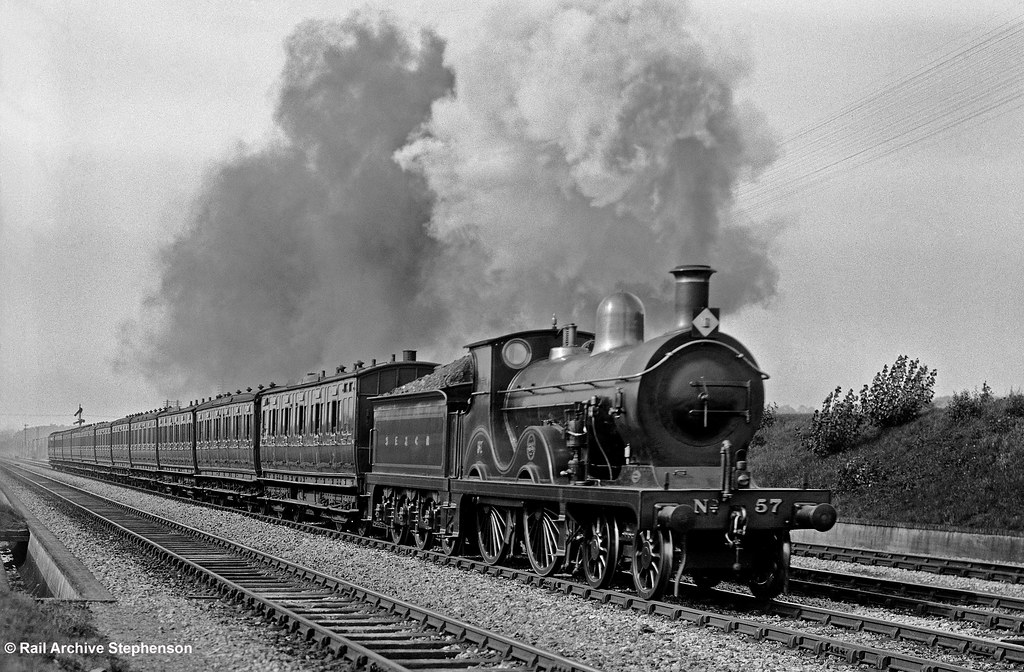
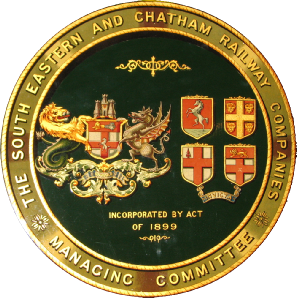
However by 1898, following the bankruptcy of the LC&DR and consequent replacement of the entire board of directors, tensions had eased somewhat. The LC&DR and SER agreed to share the operation of the two railways. They were worked as a single system, the South Eastern and Chatham Railway), (crest below), and receipts were pooled. The photo below shows an SE&CR train approaching Orpington station.
 |
 |
However it was not a full amalgamation - the SER and LC&DR remained separate companies with their own shareholders until both became constituents of the Southern Railway, on 1 January 1923.
After amalgamation some route rationalisation took place, notably the new and complex connections between the two main lines where they cross near Bickley.
Subsequent Changes
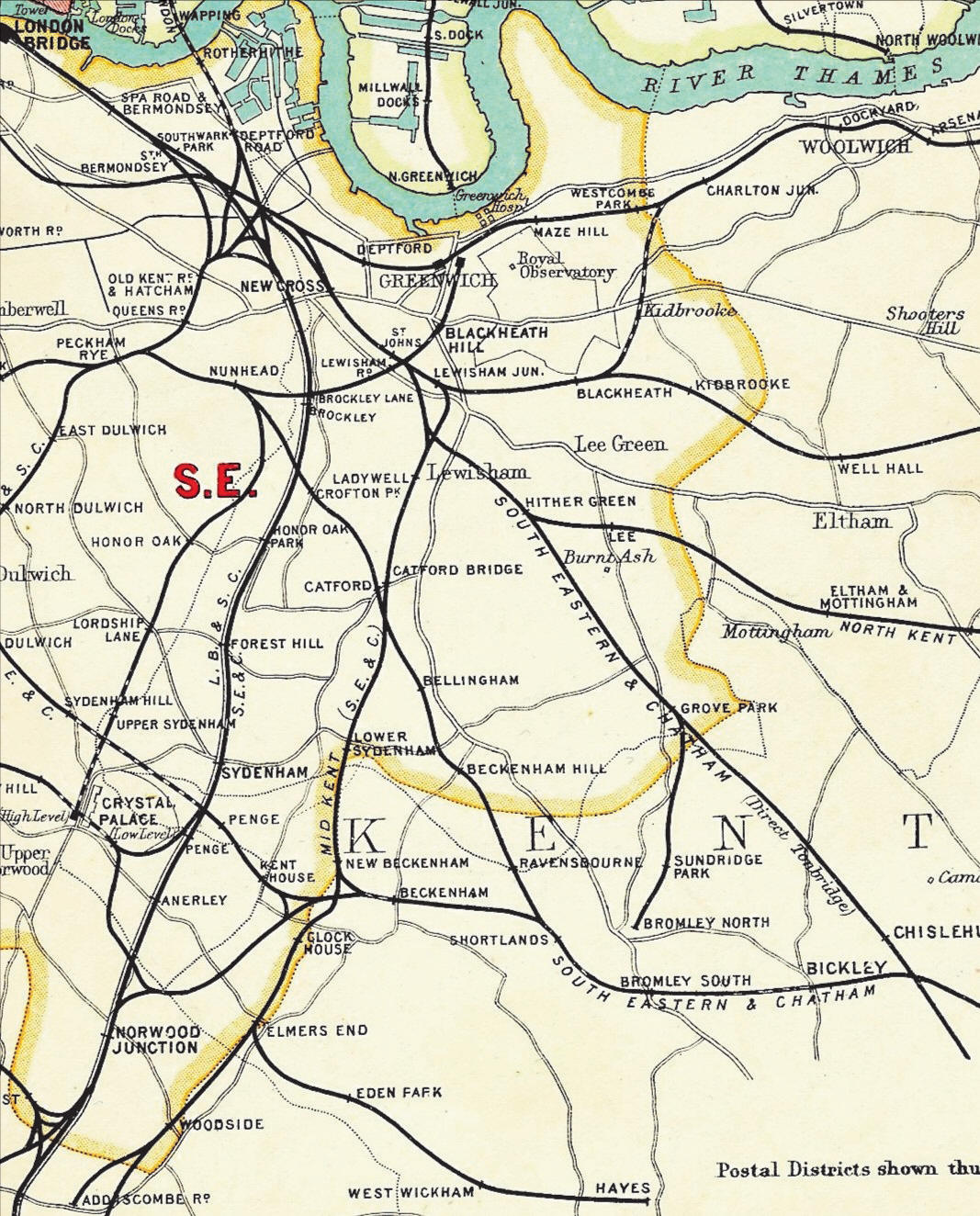
By the turn of the twentieth century the railway network had
reached what proved to be its final and most complex form as shown in
this 1908 map. Some lines shown here have since closed or been re-routed.
New since this map are the Channel Tunnel Rail Link, and the Elizabeth Line. Some old railways have been repurposed for parts of the Overground or Dockland Light Railway.
 |
MAIN LINES
Modern Map
The map below shows the combined network as it is today, with construction dates for each line.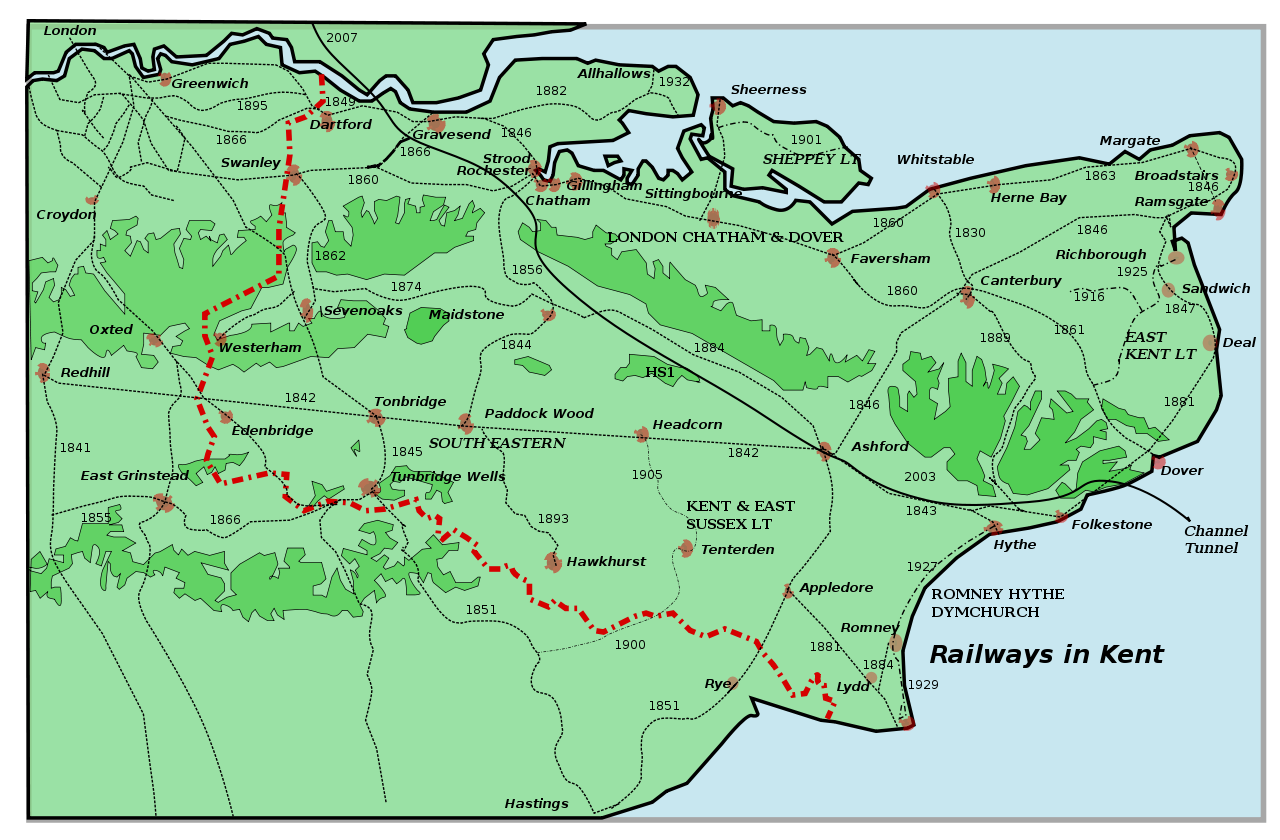
One legacy of the complicated and acrimonious relationship between companies building lines in Kent is the considerable number of alternative routes available to modern train operating companies in times of route blockages or planned engineering works.